The Extreme Conditions Ultralight Sleeping Pad by Nemo is a 3.5 inch thick, cushy pad that boasts and impressive 8.5R value. Is it truly one of the warmest and lightest sleeping pads on the market? My review.
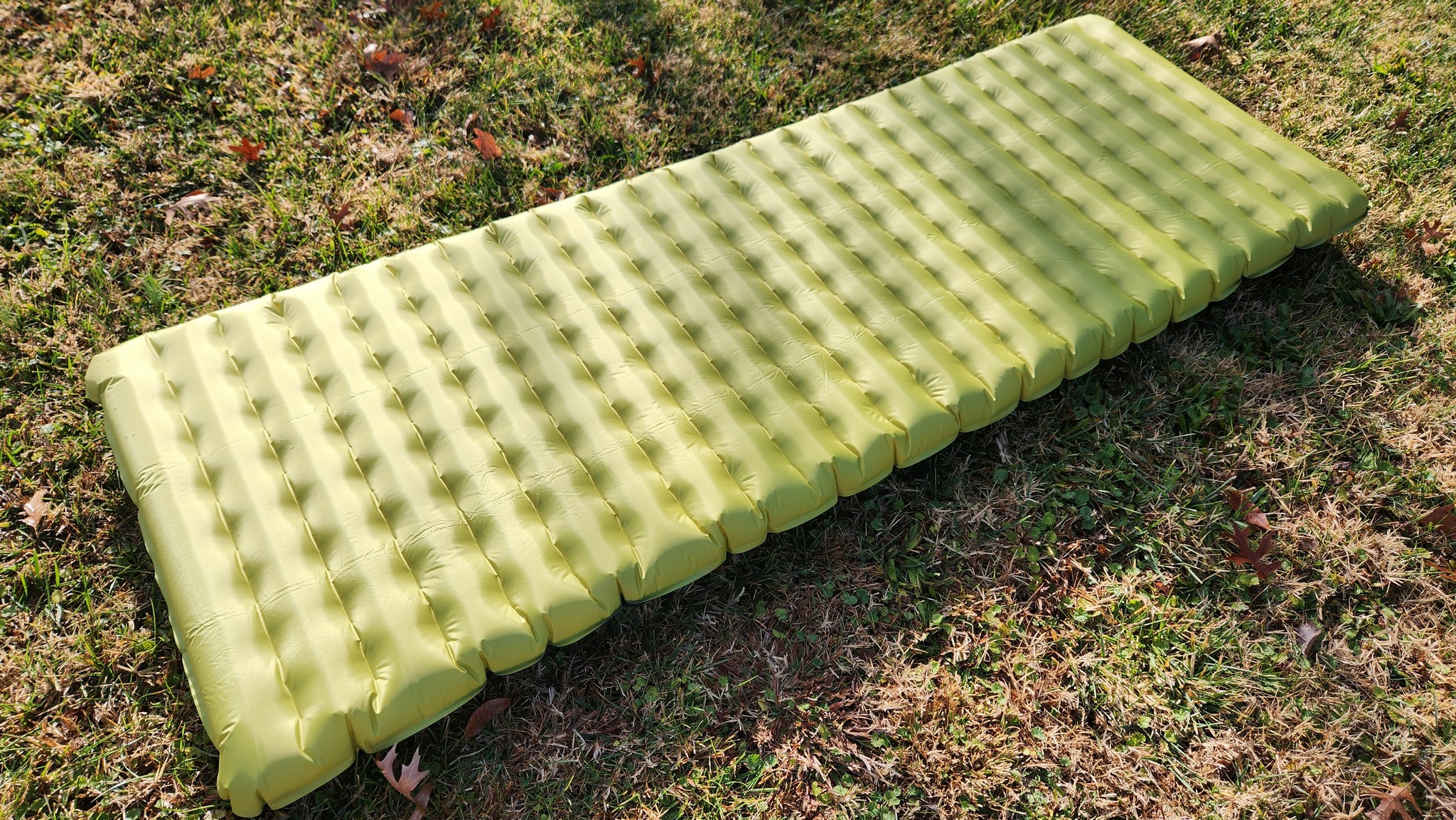
The main innovation with the EC (Extreme Conditions) pad is the inclusion of 4 heat reflective “thermal mirror” layers that are suspended within the construction. These are thin sheets of metallic fabric that bounce heat back to the user, creating insulation both at their surface and between each later. The pad is constructed from 40 denier nylon on the bottom for higher puncture resistance, with a softer, lighter 20 denier ripstop nylon being used on the sleeping surface. There are various alternating “Apex” baffles that are used to create the 3.5 inches of cushioning with a relatively flat sleeping surface. The pad includes a one way inflation valve, a fine tune release button, and an air purge flap for quick deflation. The pad starts at 1 lb. 1 oz. for the mummy design but offers wider and longer versions as well with slightly higher weights. I am testing the regular wide option which comes in slightly heavier at 1 lb. 6 oz. The pad also includes a storage sack, Vortex Pump for easier inflation, and retails at $249, or $259 in my tested configuration.

What I liked
Let’s start out with warmth, as it is the primary focus of this pad, in my opinion. Adding metallic, heat reflective layers to a sleeping pad isn’t exactly a new idea. This has been done for over a decade in pads, jackets, shoes, space ships, and much more. However, the way they are integrated in the EC is new. Traditionally, these layers are laminated into the surface layer of the sleeping pad. While this does improve heat retention, it doesn’t actually form much of an insulative layer, and generally results in relatively low R values (bigger R value numbers generally means warmer). The reason for this is there isn’t much of an air pocket being formed inside the pad as the materials are directly against the skin, so the amount of warm air actually stored is relatively low. With the Extreme Conditions pad, these layers are suspended within the pad with small gaps in between them, almost like panes in windows. These multiple layers form channels of air that each stack on top of each other, creating true pockets of warm air, and a very high 8.5 R value. This is all a very long way of saying this pad is warm indeed.
In my testing, even when placing the Extreme Condition Pad directly on frozen ground at 30 degrees F, I wasn’t able to feel any cold work its way through to the surface. The surface the pad felt warm, comfortable, and I could feel the heat being bounced back to me. I haven’t been able to test any temperatures lower than than this yet as I’m waiting for deep winter, but my initial impressions have been very good.
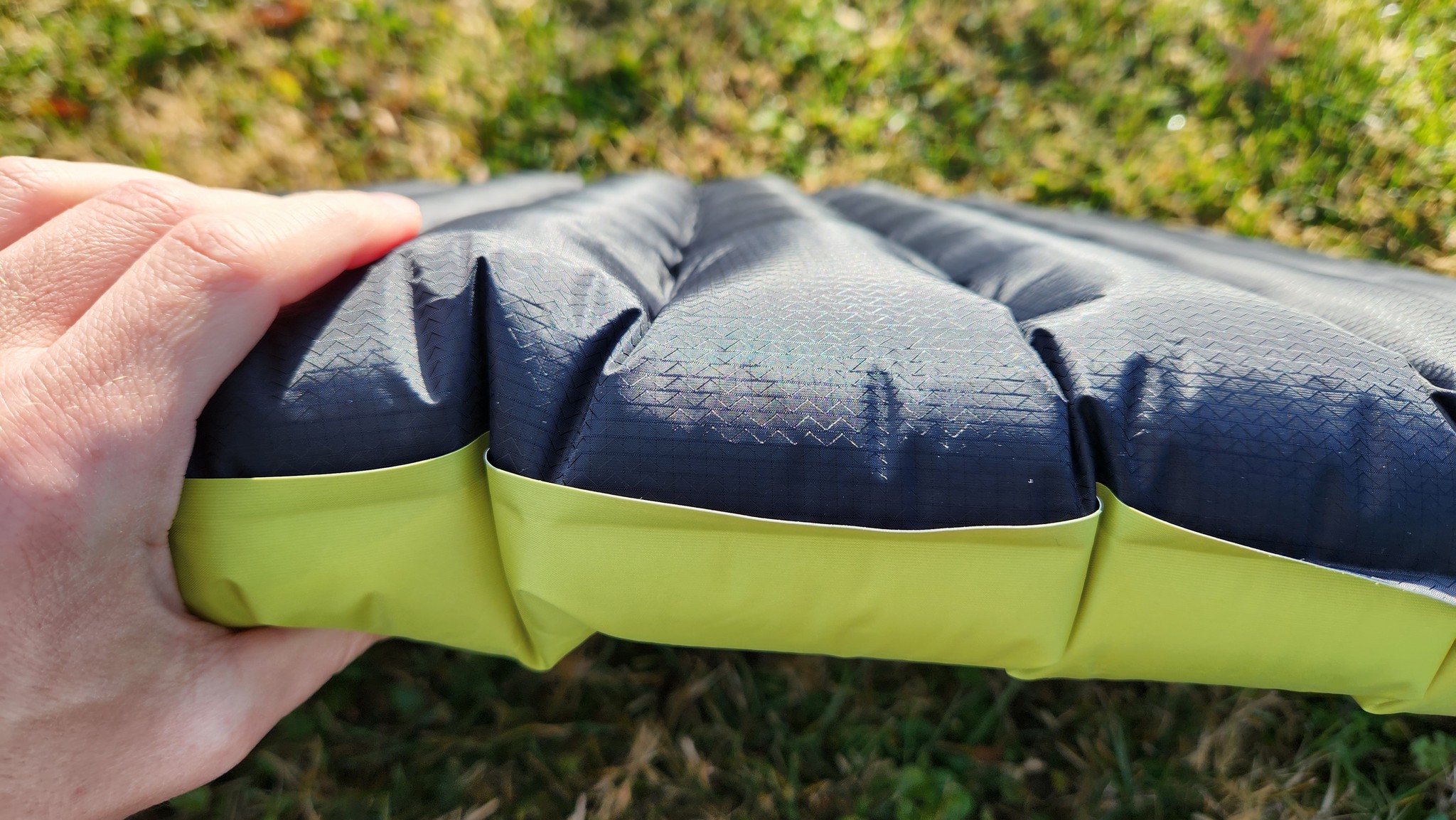
When it comes the comfort, the EC doesn’t disappoint. The combination of a thick, 3.5 air cushion combined with their alternating baffles makes for a very comfortable sleep surface. Each baffle acts like a small spring cushion that caves and forms with the body. I found that when side sleeping I could adjust the pad to be just a bit softer by releasing some air from the valve, which allowed my shoulder and hips to sink in just a bit, while keeping my back and neck (with a proper pillow) relatively straight. Stomach and back positions resulted in a flat, comfortable platform, especially when using slightly more air pressure. Weight distribution is a strong point with their baffled design, as the small air springs compress and cradle quite naturally, without creating high pressure points or bulges. The sleep surface doesn’t feel lumpy even on rough terrain, and the silky smooth fabric used on the top feels quite nice against the skin.
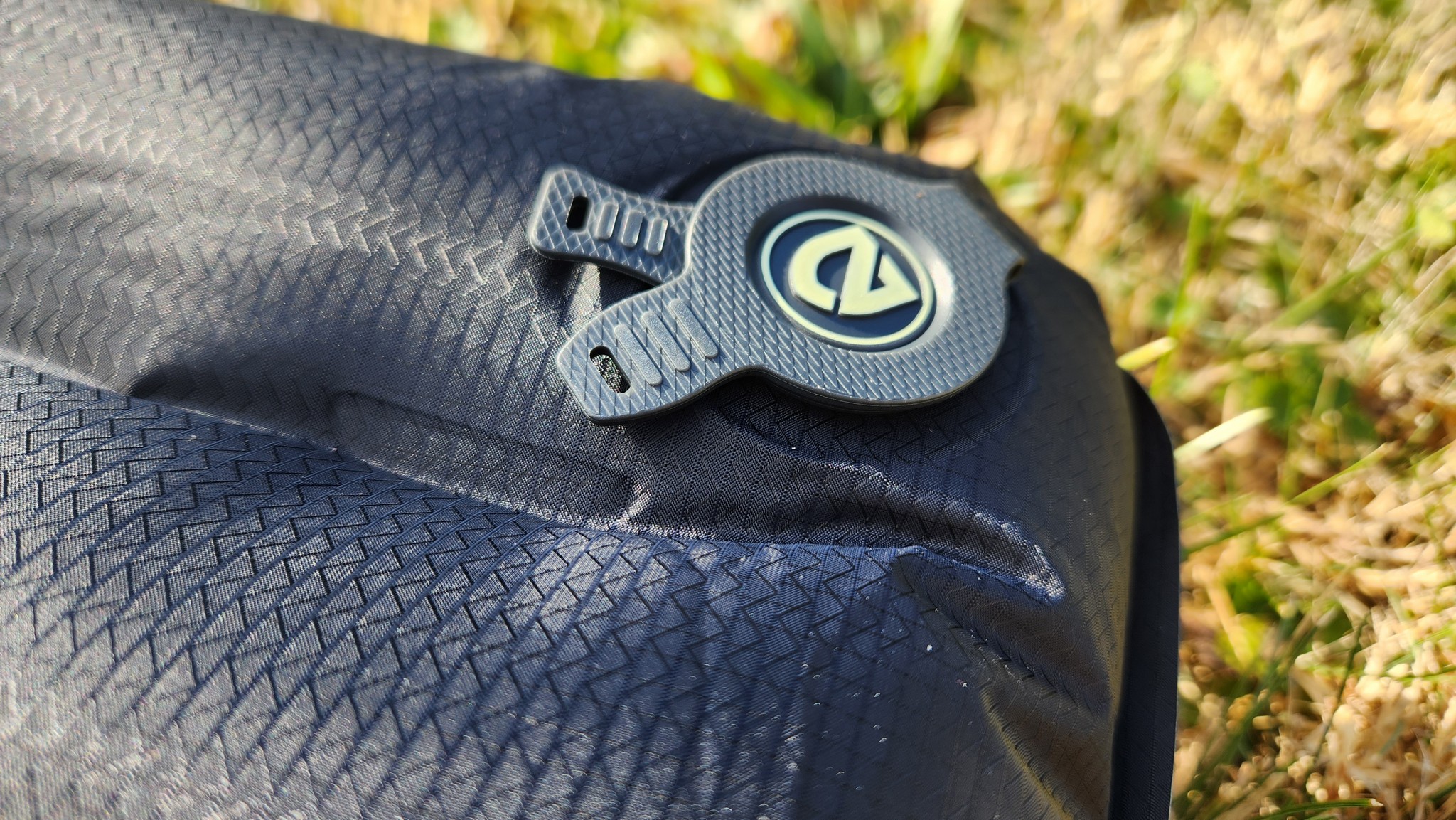
Inflating and deflating the EC is relatively painless. The pad includes their Vortex pump sack, which greatly improves setup speed while lowering the effort required. The concept isn’t new but allows the user to blow towards the sack, not directly into, which creates an air current that pulls in air around the initial gust. This multiplies the air input and reduces how much condensation is blown into the pump. The Vortex pump just pops onto the pad’s valve, the user blows towards the open pump, quickly seals the opening, and rolls the pump down to transfer the air into the pad. It works pretty well. I found it took me around 8 or 10 puffs to inflate the pad, with just a couple more for a firmer setup. The pad also features a quick deflate tab that once pulled dumps all the air inside, and a small button inside the main cover can be used to release small amounts of air for more minute adjustments.
Packed size and weight are both good. Given the addition of insulation on the EC, the pads weighs more than uninsulated options of course, but this is a reasonable tradeoff that is necessary for cold weather. The EC does, thankfully, pack up smaller than most other insulated pads as the insulation is just thin layers, and not thick, lofted insulation. So overall, this is very positive. All the different sizes roll down to about the size of a 32 oz water bottle, with the wide and long being slightly larger, but not much. Getting the pads back into the sack is relatively easy, taking only about 2 or 3 minutes.

Build and construction quality is good here, with high quality materials, stitching and seams all around. I liked the use of thicker, higher denier fabrics on the bottom of the pad for added puncture resistance with thinner ripstop nylon being used on the surface for additional tear strength. The valve is sturdy and secure, and I couldn’t find any inconsistencies in the fabric, seals or welds. It’s still an ultra-light pad, so care should be taken to avoid boots, shoes, rocks, etc., but overall I was impressed.
The pad is quiet! Unlike many pads that use insulative layers, the layers here are suspended within the pad and thus generally isolated from the sleeper, so they don’t crinkle or rustle when the user rolls around or shifts. It’s not silent but still very peaceful and unlikely to disturb tentmates.

What I didn’t like
The small opening for the Vortex pump both surprised and perplexed me. I found this restricted the amount of air I could blow inside and slowed down inflation considerably. Similar systems I’ve used required roughly half the cycles of puffing, rolling and compressing, so I was surprised to see this design. I’m not sure what the reasoning is for this change. It does make it easier to seal and roll down, so perhaps this is the goal, but overall I would prefer to see this opening size at least doubled. It’s still perfectly functional, however. Just a bit slower. It’s still way faster than traditional inflation valves without them though.
The EC is still not as warm as closed cell foam pads, despite the R-value. I still highly recommend carrying a closed cell foam mattress as a secondary pad as a safety fallback and for additional warmth in extreme cold scenarios (this pad won’t provide much insulation if it goes flat, which can happen with an inflatable pad).

Notes on R-value
Despite having an extremely high R-value, this pad doesn’t appear to be as warm as my closed cell foam pads with lower R-values. Why? Well, R-value isn’t just a measure of how warm a pad is. R-value is actually based on the thickness of insulation. Basically, R value is the thickness of the insulation divided by the thermal conductivity (thickness / conductivity = R). So, the thin sheets of insulation here provide a much higher R-value, mathematically, despite perhaps not being as warm as thicker, denser options with a lower value. I don’t know how Nemo calculates their R-values, if they measure insulation itself or the pad thickness, but this is something to keep in mind. Higher R-values doesn’t always mean warmer.
Overall
The Extreme Conditions sleeping pad from Nemo is an excellent cold condition sleeping pad. I was impressed by its ability to insulate in sub freezing temperatures, while the interspersed air cushions provided an excellent, comfortable sleeping surface for all sleep orientations. It is lightweight, packs down relatively small, and has great build quality for an ultra-light pad. The Vortex pump could use some tweaking in my opinion, but doesn’t hamper the enjoyment or usability of the package.

Highly Recommended
Want to learn more about this product and their other offerings? You can check out their products Here. This is an affiliate link. This one is not.
For information on our rating system and our testing procedures, check out our About us/ Contact us page.
I want to extend a huge thanks to Nemo for providing this product for review. We couldn’t do it without their help.
Our full disclosure can be found on our about us page. Thanks as always for reading! Don’t forget to follow our blog for future updates and reviews (link on the right also).
If you have any questions, comment below, send us an email, or find us on Twitter or Facebook (links on the right)
Discover more from TreeLineBackpacker
Subscribe to get the latest posts sent to your email.
 TreeLineBackpacker
I have this pad also and my experience mirrors yours.
I’m also puzzled by the inflation sack small opening, and I suppose it’s supposed to increase the Venturi effect and drag more incidental air into the sack, but I’d rather have a wider opening so I can just push more volume with less drag
Am I the only one that uses it black side up, but wonders if the yellow side should be up?
The black side has the valve so it’s easier to adjust the pressure in the middle of the night when it’s on top, but the green/yellow side feels thinner.
I just leave the top cap off so I can push the valve if I need a softer surface.
I did trade in from a regular to a wide because I felt like I was balancing on the regular and failing.
I actually put a regular width Tensor on top of my black Tensor and tried alternating inflation combinations and hands down, the wider version always feels more comfortable and stays under me.
I tried a pad that’s half as thick and I think the taller height of the Tensor makes a wider pad more comfortable, even on a cot that basically cradles the pad.