Named after the Pacific Coast Trail which measure 2650 miles, the 2650 GTX Mid from Danner is a lightweight hiker that is designed to be fast, stable and reliable over a wide range of conditions. My review:
Starting with the overall build, the Danner 2650 is constructed primarily out of suede for the front front of the boot for flexibility, nylon around the heel and ankle for extra stiffness, with a synthetic EXO heel cap for adding internal slip resistance and stability. The midsole is PlyGo which provides shock absorption and cushioning without a weight penalty. The outsole is Vibram 460 which provides a balance of long term durability and reliable grip on wet and dry surfaces. Inside is a GoreTex GTX membrane to keep out water and moisture. They weigh roughly 28 oz per pair, come in various sizes and colors, and retail for $200.

What I liked
I’ve been testing the 2650s for the last few months and my experience with them has been rather exceptional. Starting with comfort, the Danner’s are built with a combination of extra soft, flexible materials in the top of the foot, ball joints and around the laces, with stiffer sections in the heel and toe. This allows the boots to easily flex and fold with the foot, emphasizing natural motion, while also preventing pressure points and the wadding up of materials around the toes. The boots are cut and seamed in a way mostly eliminates typical zones of pressure and friction that I see on boots. The wearer is instead greeted with smooth, consistent, seam free material along the sides and top of the foot, which has a powerful impact miles down the trail. This is combined with the EXO heel cap, essentially a stiff, molded panel of rubber that cups the back of the heel. This prevents heel slip and shifting, which alleviates one of the most common causes of blisters. The 2650s are simply exceptionally comfortable boots that remind me of a comfortable leather couch, just without the leather. They’re soft, extremely flexible, smooth, and provide just enough wiggle room in the toes to prevent bunch without allowing shifting or movement along the slip plane. They feel great.

The 2650’s are also exceptional at preventing blisters, for the reasons mentioned above. A lack of notable seams combined with the EXO heel means feet that stay in place, without taking on unnecessary friction. Even after miles of descending, traversing and climbing non-stop, steep granite, I had no hotspots at all despite minimal break-in (3 days). When paired with a moderate thickness sock for moisture wicking, these perform great on long hikes.

Trail stability has been much better than I expected given the weight class. The boots focus most of their weight into providing stability around the ankles, heel, and in the traction of the sole. The result is a nimble, lightweight boot that still provides some roll and slip protection, without weighing two pounds. I found that uneven rocks and banks weren’t really a concern, with the reinforced ankle saving me a couple times on mild rolls on loose lava scree and river stones alike. While they’re not as robust as a dedicated backpacking boot, they hold their own and impart a great feeling of confidence on the trail.
Traction has been quite good thanks to the Vibram 460 outsole, and clever spacing and orientation of the rubber lugs. Forward facing, diamond like lugs are gathered heavily in the toe perimeter and around the heel. This produces great acceleration and braking performance, even on steep inclines, as the corners of the tread bites down onto inconsistencies on the surface while the relatively high surface area provides extra friction on the horizontal plane. Near the center of the foot, around the arch and between the primary lugs, are deeper, steeper, crevice like formations that act as interior grapple points. These handily stick into mud and slick surfaces when the boot pushes into the terrain for a bit of extra grip when things are loose and sloppy. The material of the outsole itself is a medium stiffness, moderately flexible rubber which provides very good wet weather traction as well. It’s one of the best all-around tracking boots I’ve ever tested. Be it slick river crossings, wet rock, hardpack dirt, or gloopy mud traps, I always found myself feeling confident and inspired on the trail.

Weight is also a positive note. At just 14 ounces per boot, these fit well into the “ultralight” category in my eyes, without actually performing like an ultralight boot. Many of the sacrifices typically associated with UL boots such as lowered traction, durability and stability just aren’t really issues here.
Durability has so far been very good as well. Tread wear has been better than expected, considering I’ve hiked jagged, glass like lava rock, granite, sand, rock, pavement and just about every surface I could fine, with only minor rounding of the primary lugs. I’ve not noticed any chipping or missing chunks either, which is a common occurrence on this type of material. The stitching and glue has held strong, and the waterproof membrane has yet to disappoint. I don’t expect these to last as long as a heavy-weight boot, but so far they have exceeded my expectations.
I really like the simplistic design, smooth exterior, and classic yet modern aspects of the design, visually. They’re rather timeless with their felty like fabric, but clearly of a modern design philosophy with the layered synthetics and tight weaves, and I’m on board for that. They’re not flashy or showy, just attractive.
What I didn’t like
While these are excellent lightweight hiking boots, I wouldn’t really recommend them for backpacking, except for those who focus on ultra-light packing. They lack a bit of support in the arch, while impact absorption and ankle stability are only moderate. This makes them less ideal for that case, and that’s fine. These aren’t designed for that, so I’m not going to spend much time on it, but it is worth pointing out as I know a lot of people will take these backpacking anyway. They’ll certainly do the job, but sore arches should be expected with heavy pack or long miles.
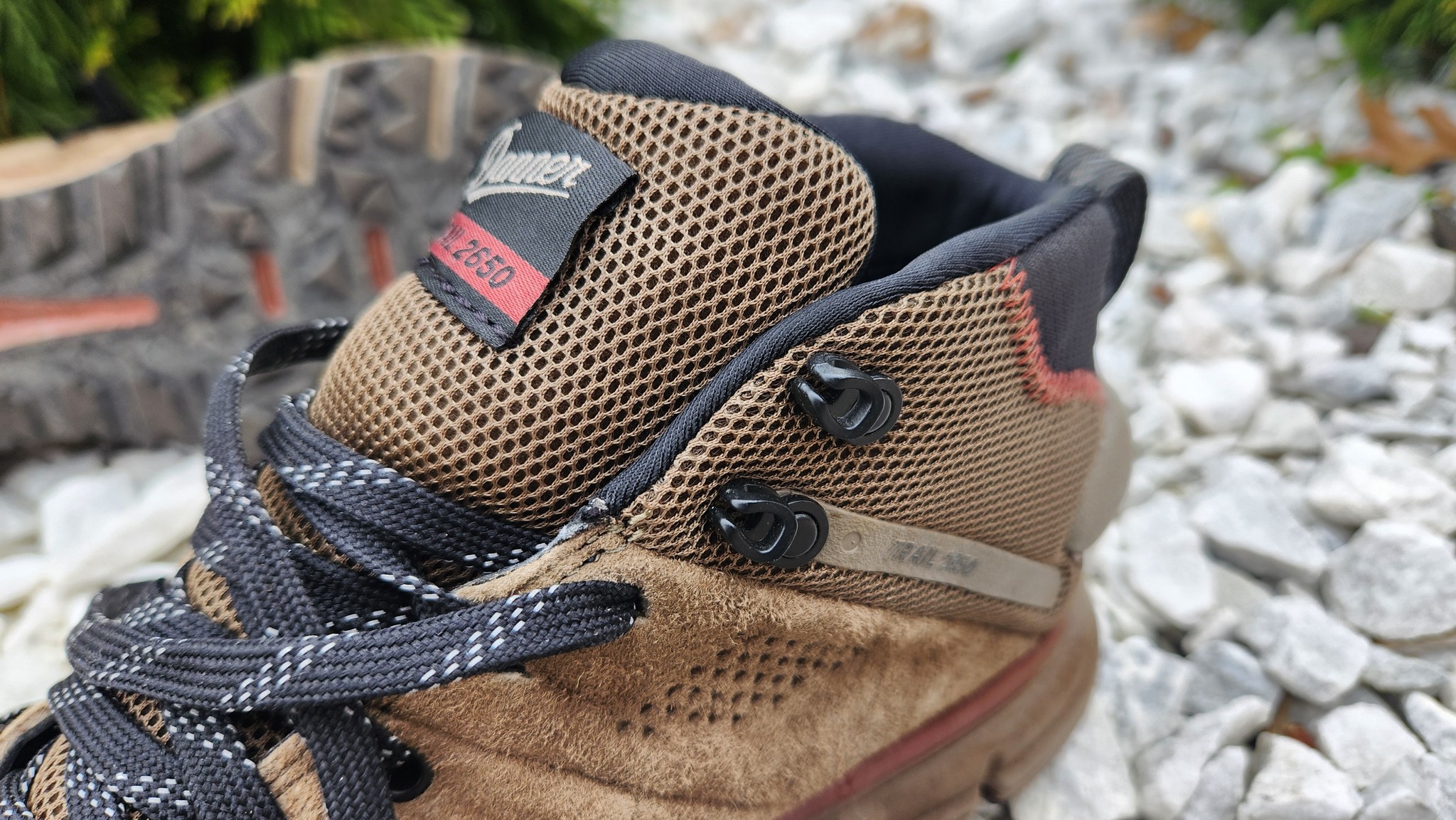
I find the hook style eyelets to be a bit finicky to work with. They certainly speed up taking the boots off and putting them back on as it requires less time sliding laces back and forth, but they are also a little small and slippery. I routinely find myself missing the eyelets, or the laces slipping out of them as they provide no grip or bite onto the laces until the shoe is tied (in which case they stop moving). This is especially challenging with cold or gloved hands. Thankfully, the eyelets are at least well padded and comfortable in use, which isn’t always the case with lightweight boots.
The heel cap looks rather strange on some color variants. I wouldn’t give it up as the utility they provide is great, but it stands out from the rest of the boot like a glob of mud on an otherwise spotless boot.
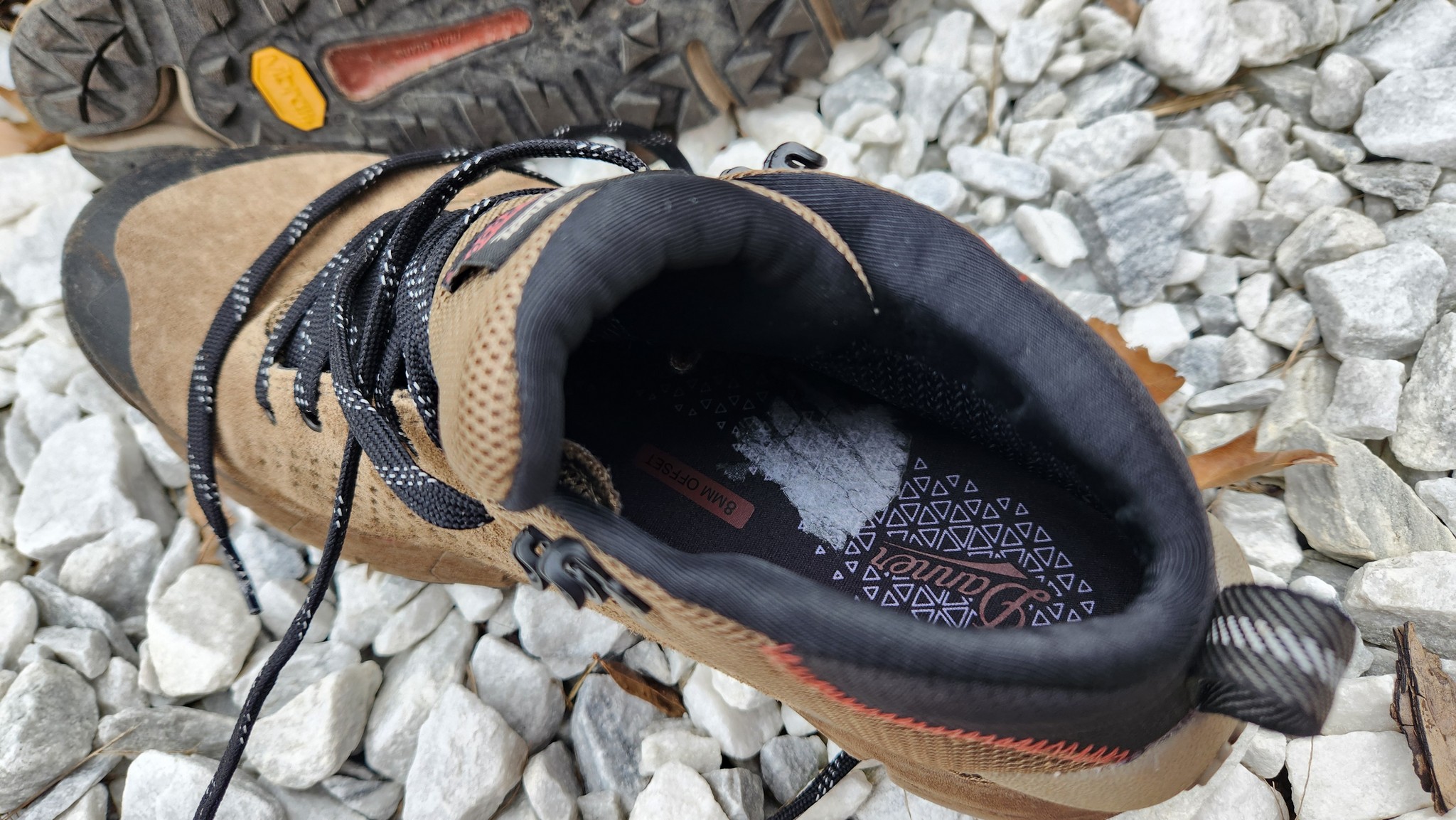
They came with a sticker inside the sole that I just could not get off without chemicals or physically scraping the inside. It didn’t affect performance, thankfully, but it was however a bit annoying. See below image.
Overall
The 2650 from Danner really surprised me. From the second I put them on they were comfortable, nimble, and felt great on my feet. They’re fast, light, and provide what I consider to be a perfect balance of weight, durability, stability and traction. Aside from a couple very minor complaints, these boots look and perform amazingly well. If the goal is lightweight hiking, these are the closest I’ve ever found to a no-compromise solution.

The Highest of Recommendations
Want to learn more about this product and their other offerings? You can check out their products Here. This is an affiliate link and can help us out. For a non affiliate link, check here.
For information on our rating system and our testing procedures, check out our About us/ Contact us page.
Big thanks to Danner for sending this over for review. We couldn’t do this without their help.
Our full disclosure can be found on our about us page. Thanks as always for reading! Don’t forget to follow our blog for future updates and reviews (link on the right also).
If you have any questions, comment below, send us an email, or find us on Twitter or Facebook (links on the right).
Discover more from TreeLineBackpacker
Subscribe to get the latest posts sent to your email.
 TreeLineBackpacker
Hello; “heal and ankle” …. ”heel” is the word you were looking for.
Thank you for your reviews.
/r/
Al
The thing about boots like these is, you don’t realize how much they matter until you’re halfway up a mountain and your feet are screaming at you. That’s exactly why this review caught my eye — because on treks like Everest Base Camp, the wrong boot can ruin everything.
I’ve been on those steep, uneven stone steps from Phakding to Namche, and I know what it feels like when your heel starts slipping and every step feels like a gamble. Reading about the EXO heel cap and that blister-prevention design honestly made me wish I had these Danner 2650s back then. They sound like the kind of boot that would’ve saved me from those endless foot-taping sessions in Tengboche.
And the lightweight stability you described? That’s gold in the Himalayas. Imagine tackling the rocky glacial moraine near Gorakshep or the icy passes on a Three Passes trek with boots that don’t feel like anchors but still keep you upright. That flexibility could mean the difference between trudging through the pain and actually enjoying the raw beauty around you.
Have you (or anyone here) tested them at high altitude in cold, wet conditions? Because if they hold up there, these might be exactly what Nepal trekkers have been waiting for.
https://www.himalayaheart.com/trip/budget-everest-base-camp-trek