The Muon series from Rab is all about speed and agility, featuring a form fitting high stability design, a removable lid, and and an impressive 50 liters of capacity at just 2.2 lbs. That sounds good on paper, but how is it actually on the trail? My review:
The Muon 50 is just one of the packs in Rab’s new Muon line, but is the specific model we’ll be specifically covering here. The smaller packs ditch the removable lid, but are otherwise very similar in design with the same frame, materials and colors, and of course the obvious size difference.
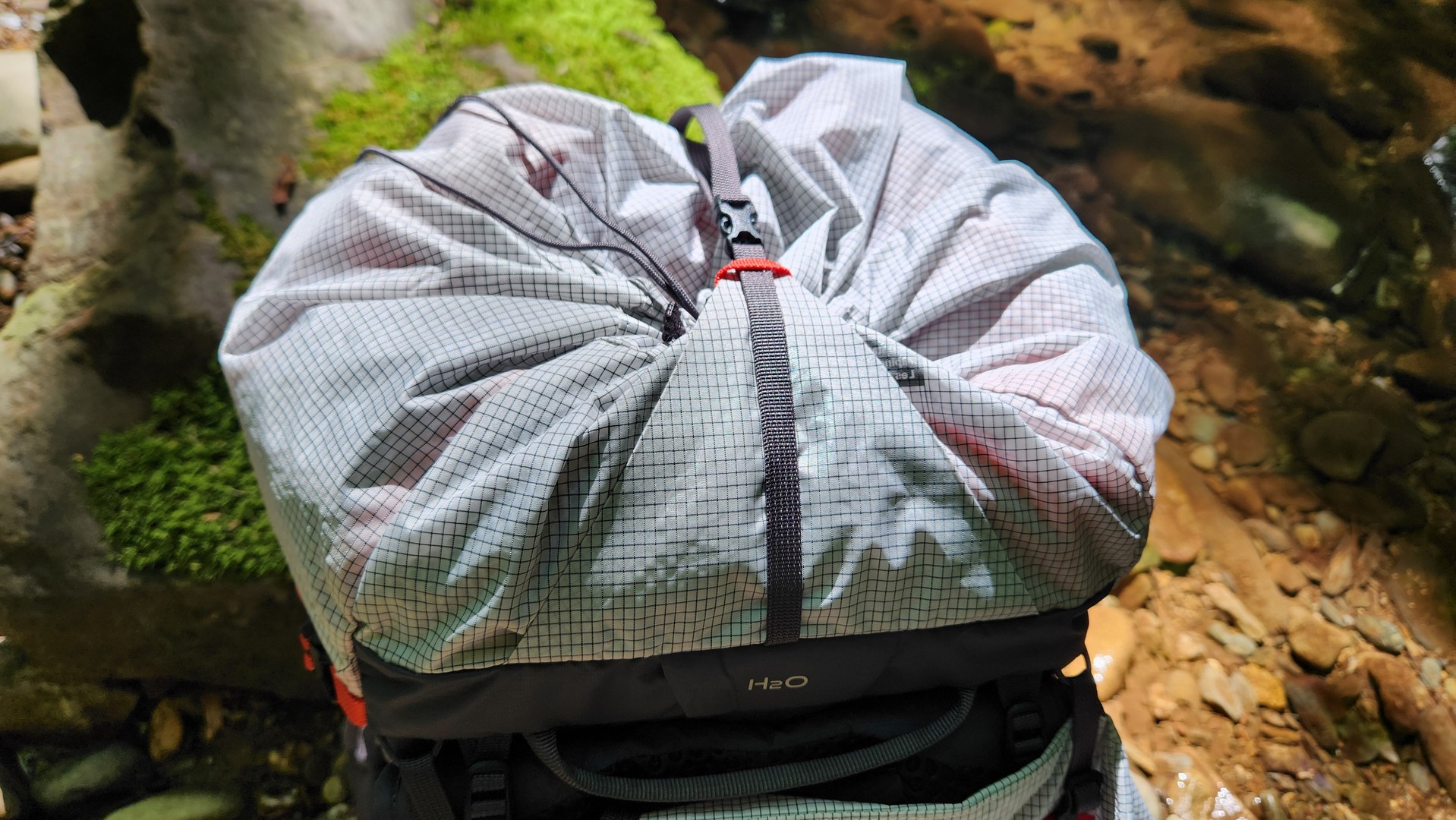
The Muon packs are built around Rab’s Tri-Flex suspension system, which is a combination of a high quality, tubular aluminum frame, paired with a padded back panel and wrap around body straps. The fabric is primarily high quality, UV resistant, 100 denier ripstop nylon, featuring Cordura fibers inside for increased tear strength and tear resistance. The pack features the removable lid which itself sports a top zippered pocket, a semi-transparent internal pocket with a zippered enclosure, and a handy key fob clip that prevents keys or other important items from falling out accidentally. The pack body has a roll top enclosure with a cinch/clip reinforcement, two large water bottle pockets, an expanding stash pocket, two chest pockets, adjustable hip straps, compression webbings, and a cordage based chest strap system. As mentioned above, the 50L Muon weighs just 2.2 lbs. (.95 kg), and retails for $260.

What I liked
When it comes to backpack reviews, one of the first things I always mention is comfort, and for good reason. A pack is useless if it’s not carrying you’re equipment, yes, but if it’s uncomfortable you should not be carrying it in the first place. The Muon, thankfully, is a very comfortable pack. The unique frame design, which consists of a tubular aluminum perimeter, combines with soft back padding and wide, shape conforming padded straps. The aluminum frame, part of the “Tri-Frame” system, wraps around the upper perimeter of the back panel, then narrows and terminates into the lower back area, directly into the hip pads. This does a couple things, including distributing the weight of the pack into the hips, providing additional trail stability, but also just kind of gets out of the way of the user with it’s unique tapered design. There is no elbow contact, and the back panel doesn’t contact against the entire spine, which I like. This improves ventilation and comfort just by reducing friction and contact points. The upper frame extends just high enough above the pack to provide usable load lifters for the shoulder pads, which prevents the weight of the pack from sitting on the user’s shoulders and neck. This reduces or even prevents should er and neck strain, which can result in pain and headaches. It’s an overall great frame design which holds up well to a large amount of weight (35 pounds was no issue for me).

Still comfort related, the padding on the Muon ss rather unique and highly effective. Instead of using more tradition narrow, dense, high thick pads, the designers opted instead for wide, low density, highly encompassing straps. The chest straps for example aren’t very thick, but they do extend wide across the chest, covering a much high surface area than most packs. This prevents the weight of the pack from concentrating on a narrow arrow and pulling into the shoulders and arm pits, instead sitting broadly across the chest like a vest. The hip straps are the same way with wide, highly compressible pads that cross the entirely of the hip bones, maximizing surface contact and minimizing direct pressure. This means less weight/pressure is on sensitive areas like the shoulders, arm pits, etc. Instead, the weight is being distributed across durable, weight bearing parts of the body like the hips. The pads are also highly breathable, with a mesh covering a foam that seems to breath quite well.


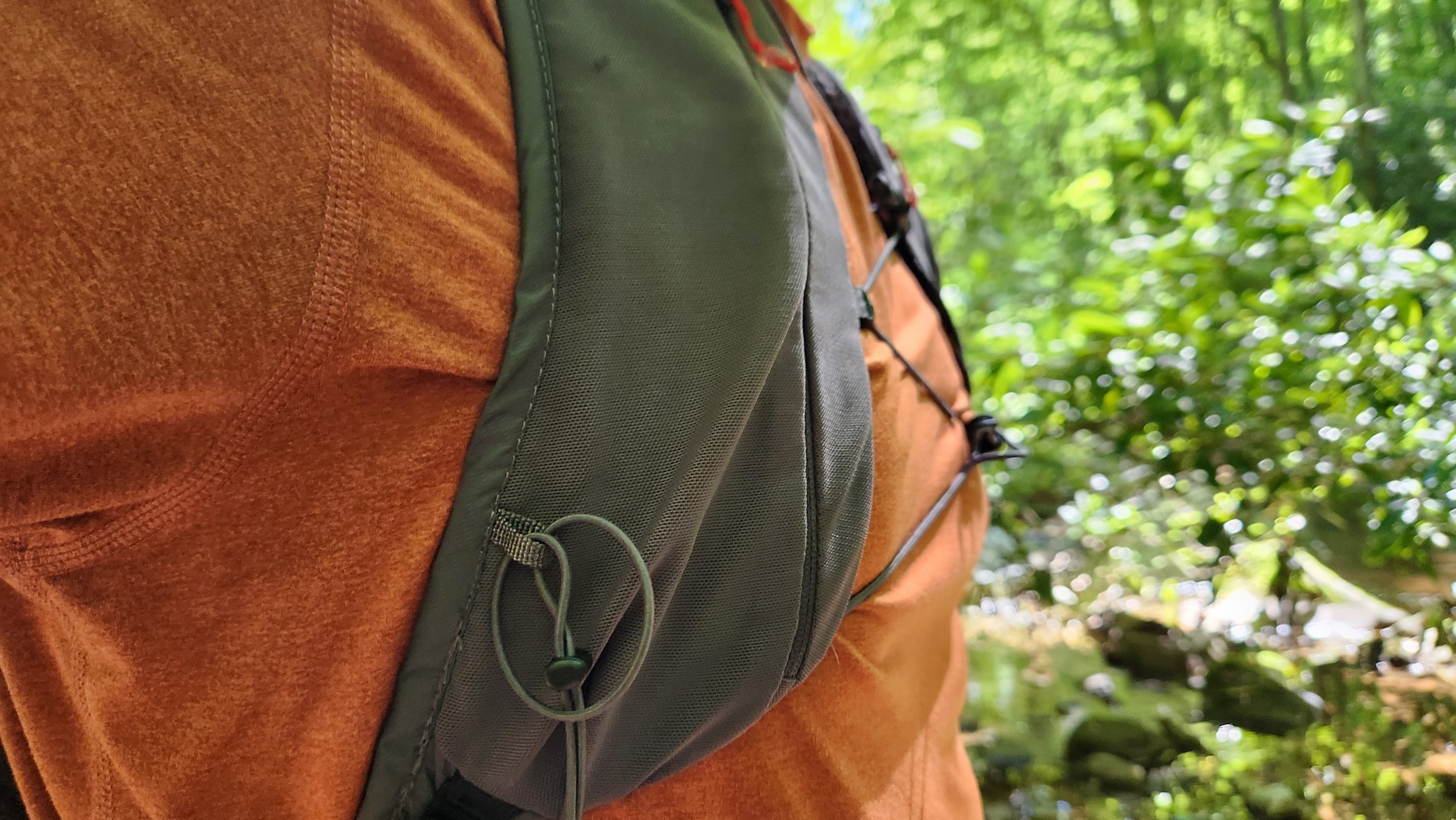
Again drilling down to a more granular subject, the chest straps are very unique. Instead of a clip that can be moved up and down or re-positioned in other ways, the Muon instead opts for this clip and string solution, where the clips can be connected to any loop point on the chest straps, while each cord can be tensioned down independently. There are two clips and two tensioners, terminating at 5 points for the cabling itself. This provides granular, discreet, and even non-discreet adjustments, which really allows the chest straps to be dialed in to exactly where it’s needed.

Organization is good with the Muon. I liked the traditional zippered lid and the hidden internal pocket is nice if even a bit standard, but the transparency applied to this pocket was a stand out feature. It helps when trying to dig out smaller items like keys or bug spray, without having to dig haphazardly through the pocket. Considering this is normally where I keep valuables like wallets, keys and phones, it helps reduce the chance of losing anything of particular importance as I can take a quick glance, see what I need, and retrieve it quickly. The pack also features two very large water bottle pockets that terminate into a stuff pouch. It is basically one large opening and objects can be moved or distributed throughout. This can work fairly well and allows the pack to hold extremely large bottles, thick jackets or other items if need be. Two small chest pockets are great for snacks, sunblock, perhaps a small blade or anything else a hiker may want to grab while on the go. The main compartment is just that, a large open compartment. It only allows for top access but I don’t personally mind the lack of side or bottom zippers if it cuts some weight. It does mean that items in the bottom are going to take some effort to get to, so pack with this in mind.

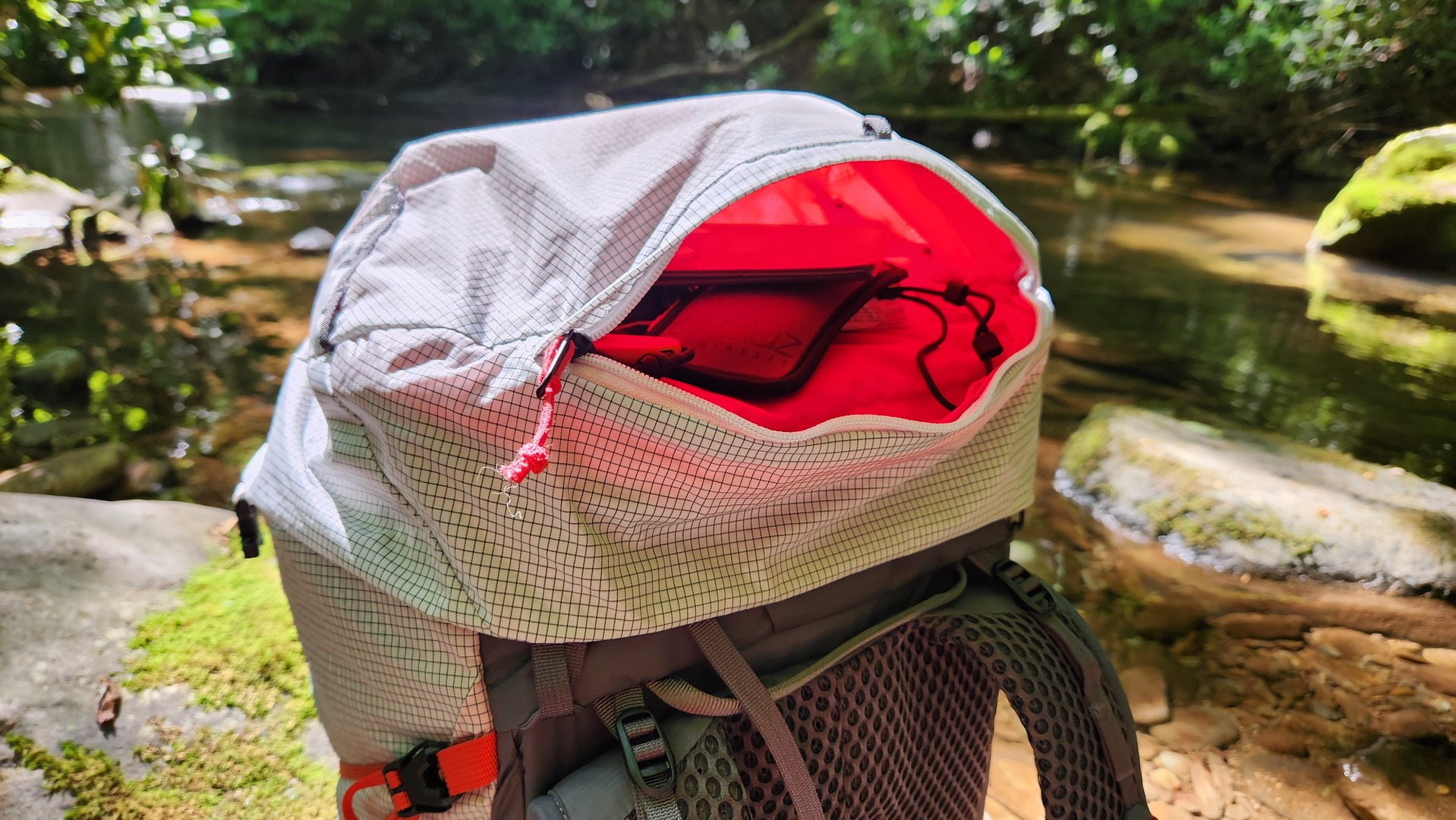


Build quality and construction overall is very good. The fabrics have held up great with no signs of fading or stretching, and the use Cordura based ripstop means any punctures that could happen are unlikely to spread, and are highly patchable. The fabrics feel good to the touch, even if a tad papery and crinkly at times, but are surprisingly modern and overall pleasant to touch. It sheds water decently well as well, although not waterproof. The seams and zippers have held up great with no fraying, no hangs or snags to speak of. Even the cordage and straps, despite being surprisingly light, feel surprisingly durable.

Trail stability is fantastic. The pack, when properly adjusted, doesn’t shift or move at all, and it stays in place when moving fast on the trail. The weight stays close to the spine, reducing the tipsy feeling that many heavily loaded packs can suffer from. It’s nimble, non-fatiguing, and feels secure even when climbing and hopping. It’s also very quiet, with no creaking or popping.
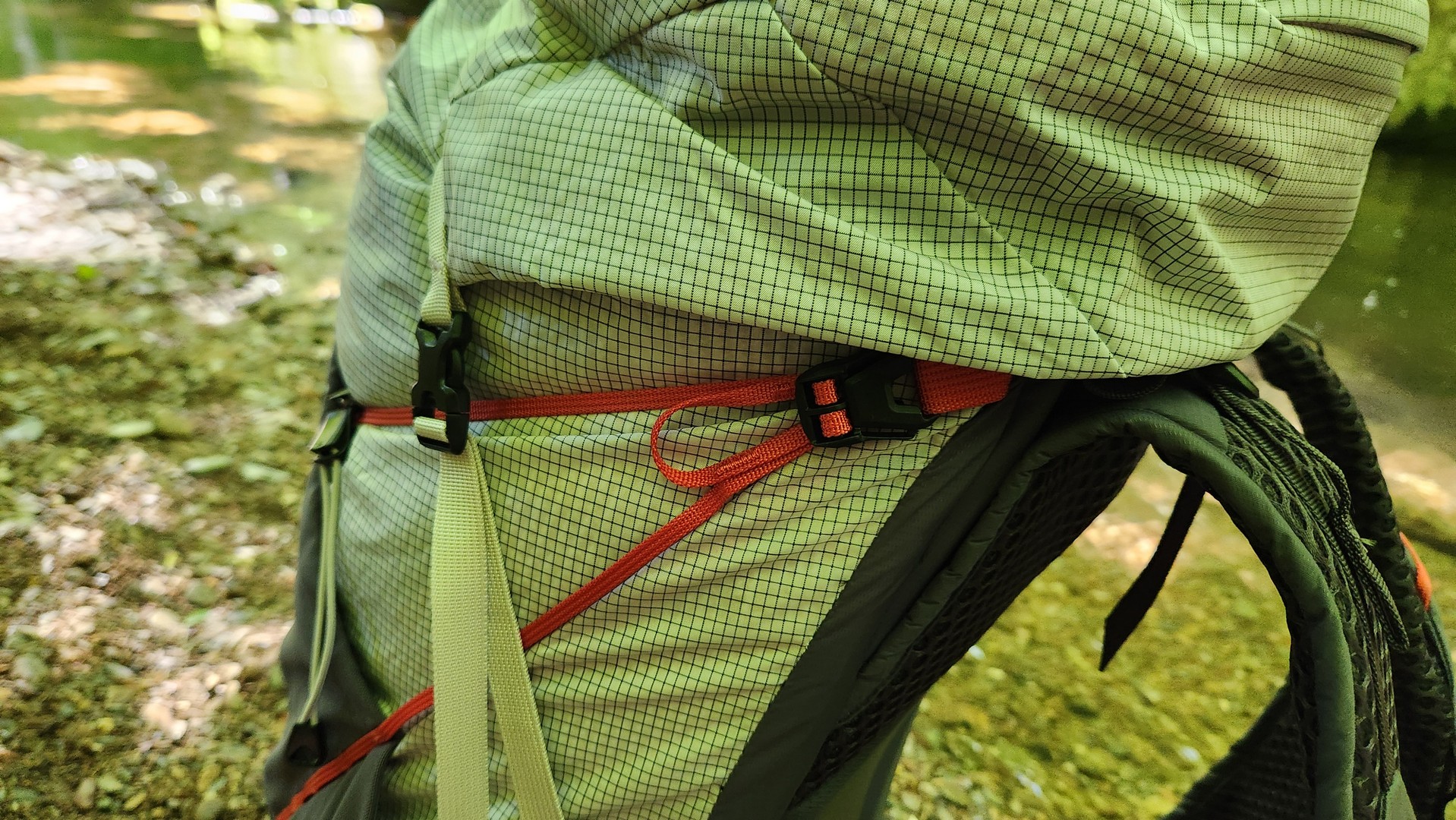
Weight-wise, the Muon strikes and excellent balance between mass, durability and packed size. It has all the necessary and nice to have features, without splurging on unnecessary features or cutting weight on things like durability. It’s kind of a long distance hikers dream at 2.2 lbs for a 50 liter pack.
What I didn’t like
While I like the chest strap design for it’s comfort and adjustability, it also comes with some quirks. The clips, for example, can be a little finicky to get into place. They’re small hooks that connect onto corded loops that stay in place via tension. Many times I would clip the top clip only for the bottom clip to pop off, leading me to re-connect the bottom, only to have the top pop off again in the process. Once it’s in place, it stays in place, but getting it there can be a little fussy. The hooks also are a little slower to remove than a traditional plastic clip (2 or 3 seconds vs 1, but hey) which took me some getting used to. The cordage routing also ensure that it will never sit straight and level, so those who like a pack that presents clean, even and flush, might have some issues with seeing a zig-zagging line running across the pack, aesthetically.

The water bottle pockets are a blessing and a curse. Just tossing a couple of bottles inside results in a loose, floppy experience where the bottles can not only move around on the trail, they can actually come out of place and fall from the pack when climbing or scurrying. I found that I needed to stuff a rain jacket or some other object in there with them to help keep them in place. This, or I simply kept bladder based water inside my pack. The concept behind these large pockets is that they are huge and can really carry anything, be that jackets, maps, binoculars, or whatever. However, without any method to fully secure smaller items it becomes a mixed bag of pros and cons. The easy solution is larger bottles, or soft bodied bottles like the 1 liter Platypus bottles, which seem to stay in place well.

Overall
The Muon 50 is a fantastic backpack that takes a lot of risks, and most of them pay off. It’s lightweight, comfortable, and provides and excellent and of space and organization. I really loved the padding an how it felt against my body, never once feeling any pressure points or pain on the trail. My only complaints are finicky chest clips and relatively unsecure water bottle pockets, which can both be worked around. In the end, it’s a fast, nimble pack that suited my needs very well, at a price that is rather reasonable too. It comfort, weight and stability are high priorities and you can deal with the water bottle pockets and chest connection points, this is a very solid option.
Highly Recommended
For information on our rating system and our testing procedures, check out our About us/ Contact us page.
Want to learn more about this product and their other offerings? You can check out their products here on their product page. This is an affiliate link and helps us out.
Big thanks to Rab for sending this over for review. We couldn’t do this without their help.
Our full disclosure can be found on our about us page. Thanks as always for reading! Don’t forget to follow our blog for future updates and reviews (link on the right also).
If you have any questions, comment below, send us an email, or find us on Twitter or Facebook (links on the right).
Discover more from TreeLineBackpacker
Subscribe to get the latest posts sent to your email.
 TreeLineBackpacker