Traditional water bottles are, in reality, a bit problematic. They’re difficult to drink from, produced from non-renewable resources, fail quickly, and they make water taste like plastic. Bivo hopes to change all of that with their steel constructed bike bottles, and it actually works.
So what is the deal here? Another day another water bottle, right? Well not really. Simply put, Bivo has designed a water bottle that is constructed primarily from high quality stainless steel. While this sounds simple enough, it actually required quite a bit of engineering. Consider that it has to fit inside a traditional bottle cage that is made to fit with flexible plastic, and that traditional water bottles have to to be squeezed in order release water due to the vacuum seal the narrow nozzle creates. Bivo managed to keep their design cage mountable by integrating deep sliding channels into their taller bottles, while slimming down the tops of their traditional sized bottles so they could pop right into most mounts. Allowing water to flow from a narrow tipped bottle that can’t be squeezed involved creating a two separate channels. One channel allows water to flow out, while a second channel, in the form of a tube that extends into the bottom of the bottle, allows air to flow in, essentially eliminating the vacuum pressure that would normally stop water flow. It creates a perfect equilibrium that allows air to flow in as fast as water flows out. It’s kind of brilliant yet simplistic.

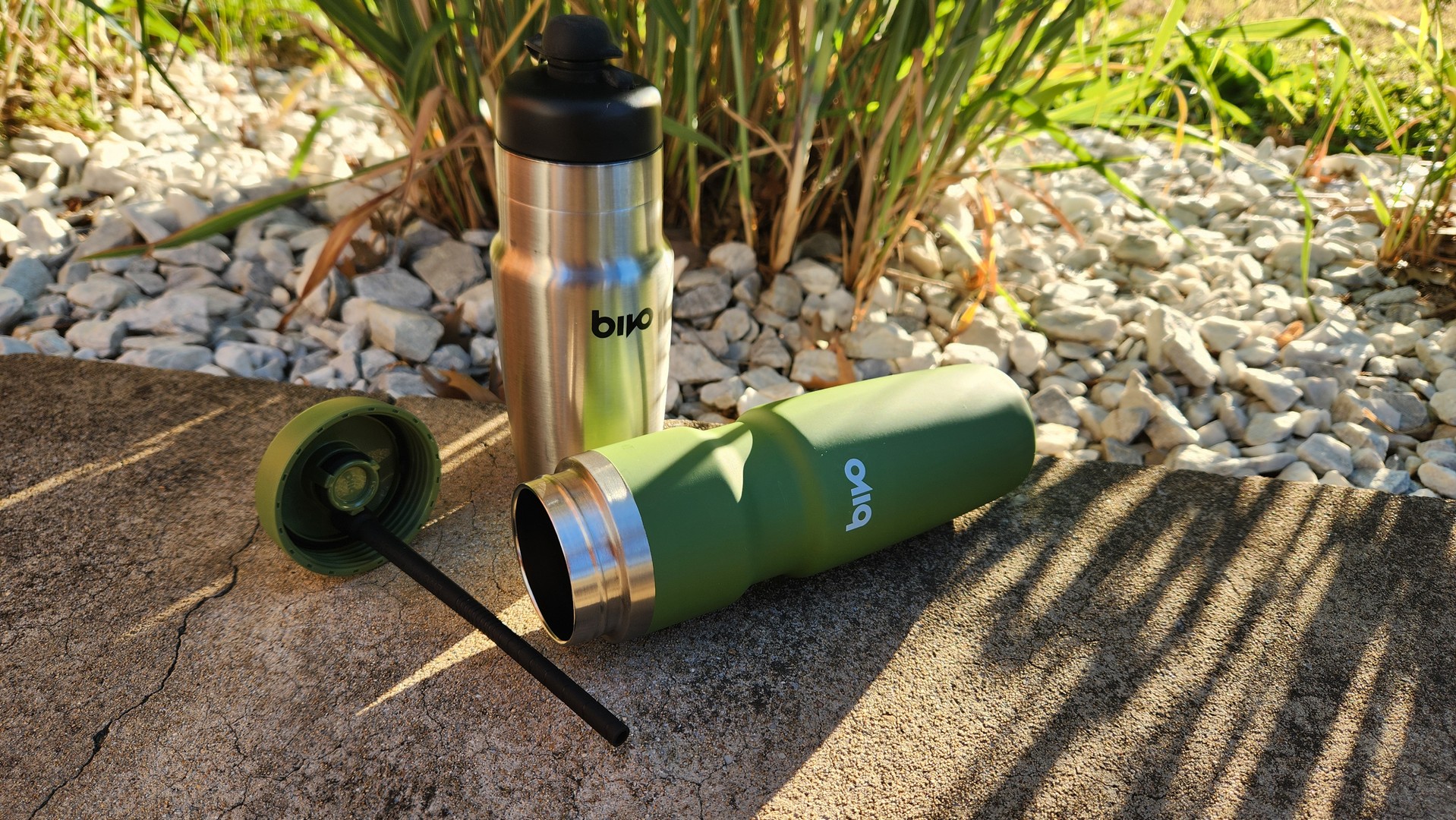
The bottle itself is actually a combination of materials. Stainless steel for the body, plastic for the cap, and silicone for the nozzle, cap, and internal straw that allows air to escape. The exterior comes in both painted and exposed stainless variants. The remaining parts, lid and cap, are both replaceable and they sell the components separately, right down to the dust cover. The design uses roughly 69% less plastic than a traditional plastic bottle, which can certainly add up over time. The Bivo bottles come in a few varieties, sizes, and even insulated and non-insulated variants.
Using the bottle was, at first, actually kind of weird. Being so used to squeezing a bottle to purge the water, I was surprised with the sudden unimpeded rush of liquid that came out of the bottle as soon as I turned it up. In honesty, I actually choked on water a few times as I fought my muscle memory to not suck down water while pedaling down the trail. I found myself hacking up deliciously cold water numerous times: Not great on the climbs. However, after a little time adjusting this magical flow of water, I quickly became adjusted and a bit spoiled by how fast and easy it was to drain the contents. I have actually completely chugged a 21 ounce bottle down in one prolonged drink on one of my hotter rides, so I had to learn to control how fast I consumed my reserves. Once getting used to it, it’s very hard to go back to a squeeze bottle. It just feels natural and I take in a lot less air than a traditional design. The nozzle does open and close, which is as simple as pulling up on the nozzle to open.
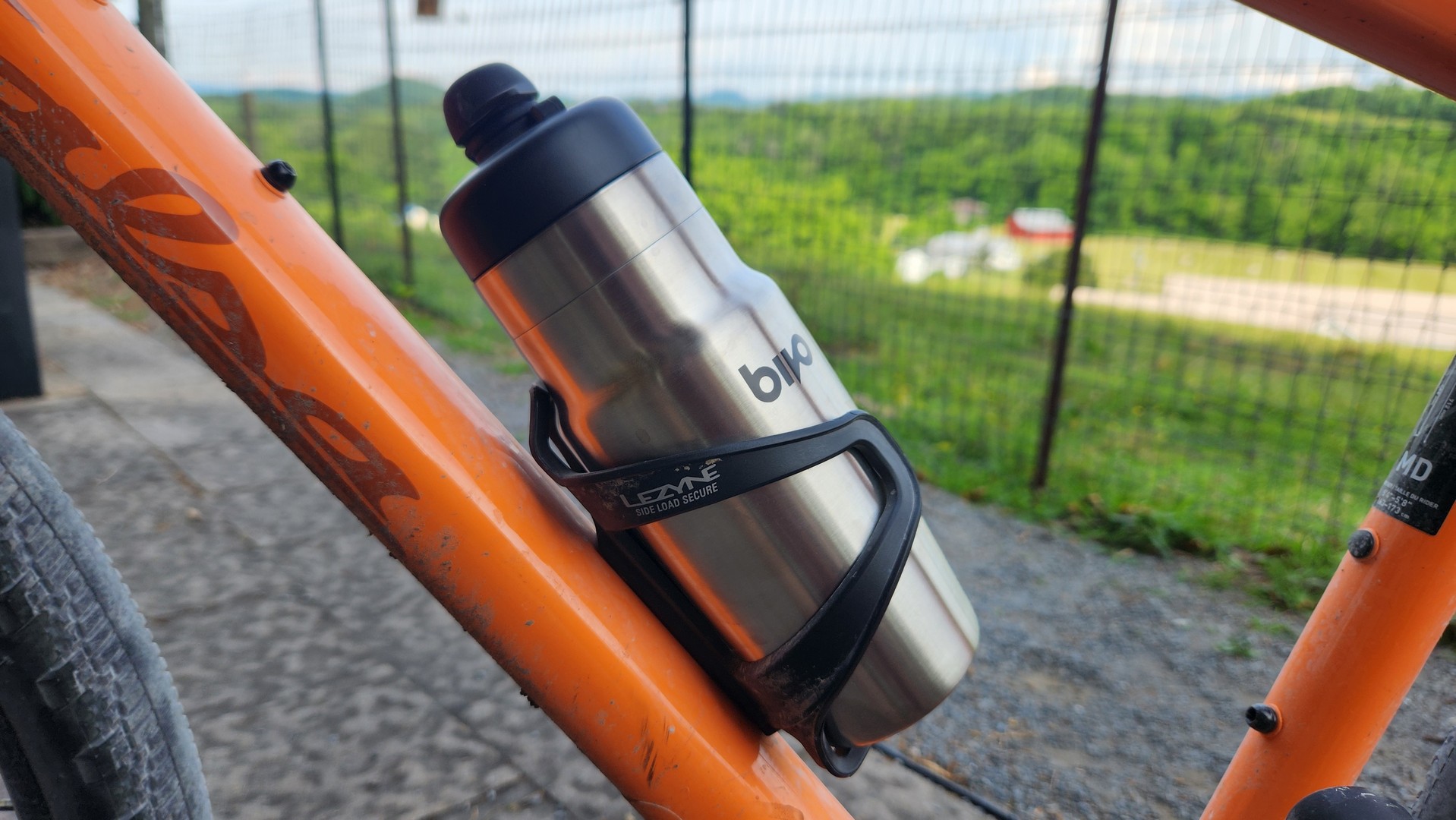
The taste of the water inside is also a big improvement. While not completely flavorless, what is there is decidedly less plasticky. The cap and the straw both contact the water as it flows through, and it does pick this up, so it’s not perfect. Still, it is markedly cleaner tasting than any of my other bottles, which can honestly be a bit gross at times, especially in the heat. I do wonder why they use a silicone straw, instead of perhaps an aluminum one, as that would eliminate the only component that continuously touches the water while it’s in transport. Likely cost or challenges associated with constructed a threaded straw, I imagine.
I’ve been using both their taller and shorter models, and both slide in and out of my plastic bottle cages easily. They don’t shift or rattle, and stay in place over rough terrain. They’re also usable both on and off the bike, so they do great double duty as hiking bottles. They slot well into backpack bottle pockets, which is a nice bonus.

Durability is great, but they are prone to scratching. Consider using a plastic bottle cage with these instead of metal. They offer low profile bottle cage screws and you should definitely use them or thoroughly check your own for clearance issues. Many cage screws stick up a bit and will claw the paint or finish off of the bottle as you slide them in and take them out. Kudos to the engineer for acknowledging that and providing a solution.
Pricing is admittedly a bit steep. But, it is a bottle that you can purchase once and use for, potentially, decades. With replacement parts available and easy enough to order, pricing that ranges from $34 (non-insulated) to $49 (insulated) doesn’t seem too bad. I have had to replace several $20 plastic bottles in the last few years as the plastic has cracked or the lids failed, so this seems like it will balance out over time and potentially even become a savings. My current hiking steel water bottle is currently at 18 years…and if this lasts even half that it will be a win.

Insulated vs Non-Insulated
A quick couple thoughts on the two options. The non-insulated models are lighter, and hold a higher volume of water inside, as there isn’t the vacuum sealed void taking up any space. They’re also cheaper. The non-insulated versions feel rugged in the hand and of course keep liquid cold for longer. Personally, for me, non-insulated is the way to go. I like the weight and cost savings, and water doesn’t last long enough around me to get warm anyway. But, I still use the insulated on hot days if I hydrate really well before the ride, so I don’t feel the need to chug it all instantly.
Overall
What Bivo is doing here is fantastic. The use of recyclable, environmentally friendly materials with available replacement parts is something I absolutely stand behind. They’re easier to drink from, taste better (but not perfect) and come in insulated versions, which is a nice option. They cost more than a traditional plastic bottle, but should last decades longer. Plus, they’re far less likely to be tossed and end up in a landfill, with their high quality construction, feel, and reliability. Steel bottles are definitely, in my opinion, the new standard going forward.
Highly Recommended.
For information on our rating system and our testing procedures, check out our About us/ Contact us page.
Want to learn more about this product and their other offerings? You can check out their products here on their product page. This is an affiliate link and helps us out.
Big thanks to Bivo for sending this over for review. We couldn’t do this without their help.
Our full disclosure can be found on our about us page. Thanks as always for reading! Don’t forget to follow our blog for future updates and reviews (link on the right also).
If you have any questions, comment below, send us an email, or find us on Twitter or Facebook (links on the right).
Discover more from TreeLineBackpacker
Subscribe to get the latest posts sent to your email.
 TreeLineBackpacker
I’m sold on Bivo. I got their 25 ounce non-insulated bottle and it’s now my #1 water bottle on my bike and in my home. Planning on getting the insulated 21 ounce next. Best water bottle I’ve ever owned. Period.
They’re quite great! I’ve started hiking and biking with them basically everywhere.
I have used the the Bivo bottle for cycling but I was not that impressed. I have been using the Speedfil Speedflask and I find it to be a better insulated steel bottle and much easier to drink with better flow. Also I don’t have to deali with a straw to clean.
Hi JP. Thanks for the feedback. Sorry you weren’t enjoying it. I haven’t tried the Speedflask. It sounds like I need to check it out.
I’ll see what I can do.